
Going “No Contact”

Going “No Contact”

Choosing to go no contact with someone is rarely an impulsive decision.

Most people reach this point after trying everything they can to repair the relationship and create healthier communication.

You may have tried explaining how their behaviour affects you.
You may have asked questions, hoping for understanding or accountability.
You might have gone to therapy to find better ways to cope or respond.
You may have even tried “grey rocking” i.e. limiting emotional engagement just to reduce harm.

And still, nothing truly changes. The relationship remains painful, draining, or emotionally unsafe.

In situations like this, going no contact after emotional abuse or long-term mistreatment may begin to feel like the only remaining option.

Why People Choose No Contact After Abuse

For many, no contact isn’t about anger or punishment. It’s about reaching a point of emotional exhaustion.

Usually, people choose no contact because they’ve already tried:

  • Communicating their needs
  • Setting boundaries
  • Seeking professional support
  • Reducing emotional engagement

When even “grey rocking” starts to feel inauthentic and depleting, it can become clear that simply minimizing interaction is not enough. Deep down, you may still long for meaningful, respectful connection and recognise that it isn’t possible in the current dynamic. That’s a painfully real realisation to come to.

It’s Hard to Heal While Staying in the Same Dynamic

Especially if you’ve experienced repeated abusive cycles, you may be working hard to change how you see yourself: building self-worth, confidence, and healthier relationship standards.

AND it’s incredibly difficult to step into a new self-perception when someone close to you is still relating to an outdated version of you or consistently trying to minimise you.

The version who:

  • Over-tolerated harmful behaviour
  • Took responsibility for things that weren’t theirs
  • Stayed small to keep the peace

Sometimes, temporary no contact creates the space needed to interrupt that pattern. Distance can allow yourself to settle and your sense of self to rebuild without constant emotional impact.

How to Go No Contact in a Grounded, Self-Honoring Way

No contact doesn’t have to come from reactivity. When possible and safe, it can be a conscious, self-respecting decision. Doing it from the perspective of self-protection and not revenge helps you identify that the action being taken is centred on your wellbeing.

Here are some ways to approach it with care:

1. Process your emotions first
Try to move through intense anger or hurt before making the decision, so the choice comes from clarity and resolve instead of emotional overwhelm or reactivity. 

2. Communicate your boundary, if it’s safe
Let the person know you’re taking space and why. You may choose to give a timeframe, especially if the situation involves family or long-standing ties.

3. Honor your commitment to yourself
This period of no contact is about reclaiming your emotional space. Protect it. Use the time to focus on healing, support, and rebuilding your sense of identity.

No Contact Isn’t Failure

Choosing no contact doesn’t mean you didn’t try hard enough. It doesn’t make you cruel, dramatic, or unforgiving.

Sometimes, it simply means you’ve recognised that your healing requires distance.

And in some seasons of life, protecting your peace is not just valid — it’s necessary.

Take a moment to reflect:

Are you holding onto a connection that no longer allows you to grow into who you’re becoming?

In love and gratitude,

Relationships That Nourish
Finding Meaning in Everyday Life: Moving Beyond Goals to Deeper Purpose

Need more guidance?

If you want to work with me 1:1 CLICK HERE to  enroll for my coaching program where I tailor a process specifically for YOUR transformation.
Relationships That Nourish

Relationships That Nourish

If you’ve experienced past trauma, your history with relationships may not feel safe, steady, or supportive.

Instead, you might notice yourself in repeating cycles, the same emotional dynamics showing up in different people. After a while, it can start to feel discouraging. Like maybe you’re just not built for healthy relationships. Like maybe this is simply your pattern.

That belief is common.
But it isn’t the truth of who you are or what’s possible for you.

Why Trauma Can Lead to Unhealthy Relationship Patterns

When we’ve been through repeated emotional pain, our system adapts. It learns what to expect. It learns what feels familiar.

The challenge is that familiar doesn’t always mean healthy.

You might choose partners who seem right at first: kind, interesting, available. But as the relationship deepens, the emotional experience starts to feel strangely recognizable in ways that hurt.

This happens because unresolved trauma can quietly shape:

  • Who we feel drawn to
  • What behaviours we normalize
  • What we tolerate, excuse, or overlook

This doesn’t mean you’re broken.
It means your system learned to survive in the best way it could.

You Can Learn How to Have Healthy Relationships After Trauma

The patterns you learned in painful environments are not permanent. They can change.

But building healthier relationships often requires something you may not have had much of before: new reference points.

You don’t create a new relationship blueprint out of thin air.
You build it by experiencing different ways of relating.

Making Healthy Relationships Feel Familiar

Look around your life for people who already show up in ways that feel safe and respectful. These might be friends, colleagues, mentors, or community members.

People who:

  • Respect your boundaries
  • Communicate honestly and kindly
  • Take responsibility for their emotions
  • Show consistency instead of unpredictability

Pay attention to how your body feels around them.

Do you feel calmer?
Less guarded?
More able to be yourself?

That sense of steadiness is important. It teaches your nervous system that connection doesn’t have to feel chaotic or unsafe.

As you spend more time around people with healthy behaviours, the unfamiliar starts to become familiar. Your system begins to recognize emotional safety as something normal — not something suspicious or boring.

Creating a New Blueprint for Love

Over time, these experiences form a new internal template for relationships.

From this place, you begin choosing partners differently. Not just from attraction or chemistry, but from how someone makes you feel in your body and nervous system.

You’ll be more able to:

  • Recognize emotional safety
  • Notice red flags earlier
  • Trust your discomfort instead of overriding it
  • Walk away from dynamics that don’t match your new standards

You weren’t cursed.
You don’t have bad luck in relationships.

You may have simply lacked healthy models to learn from and that is something that can absolutely change.

Nourishing relationships become possible when your system learns what nourishment actually feels like.

Take a moment to reflect:
Who in your life already models a healthier way of relating — and what do you notice about how you feel when you’re around them?

In love and gratitude,

Relationships That Nourish

Need more guidance?

If you want to work with me 1:1 CLICK HERE to  enroll for my coaching program where I tailor a process specifically for YOUR transformation.
Control and Shame

Control and Shame

Control and Shame


Sometimes when we are so concerned with controlling every aspect of our lives, the people in it and how things go. We’re actually dealing with deep shame that lives at the center of that control. We may think it’s just the way we are, it’s just that we like things to be a certain way and we expect a higher standard from people. All the while we are actually ashamed of who and how we are, and we use control as the mechanism to bypass feeling how we truly feel. Let me illustrate this point.

I was thinking back to my childhood and how an incident with receiving a Barbie doll caused me deep shame and how later, this shame was actually managed through the mechanism of control. I remembered that I hadn’t received the doll because my caregivers got it out of their own free will, but I received it because I manipulated them into it.

I was 7 at the time. I remember going grocery shopping with my family and seeing a doll I really, really wanted. Of course, my family was not going to stop and get it so I did what a lot of 7-year-olds do sometimes –  I threw a tantrum on the floor of the grocery store. Arms wailing, voice screeching and tears rolling down my face, I completely embarrassed my family! Those of you with little children may identify with this scene. Those of you who ever witnessed someone else’s child do this, have felt the embarrassment of the mother/father and felt your own judgments come up about their parenting style. It’s an eyesore!

I remember the drive back home being quiet as I successfully manipulated, or embarrassed, my family into getting me the doll. However, I didn’t feel a sense of satisfaction. As a 7-year-old, I felt horrified and disgusted by my own behavior. I knew that it wasn’t the ‘right thing to do’ and very soon I started feeling awful about myself. So what did I do?

The next time we went grocery shopping I made sure I behaved like a ‘good girl’ and that I never threw a tantrum again. It didn’t stop there, it was a thought pattern, that was born in my 7-year-old self and maneuvered its way into adulthood, as I began controlling what I allowed myself in situations with people and things.  The shame of thinking I was a ‘bad girl’ was so overwhelming I would make sure that I behaved in a way that was more resonant of someone good. I kept myself in line. 

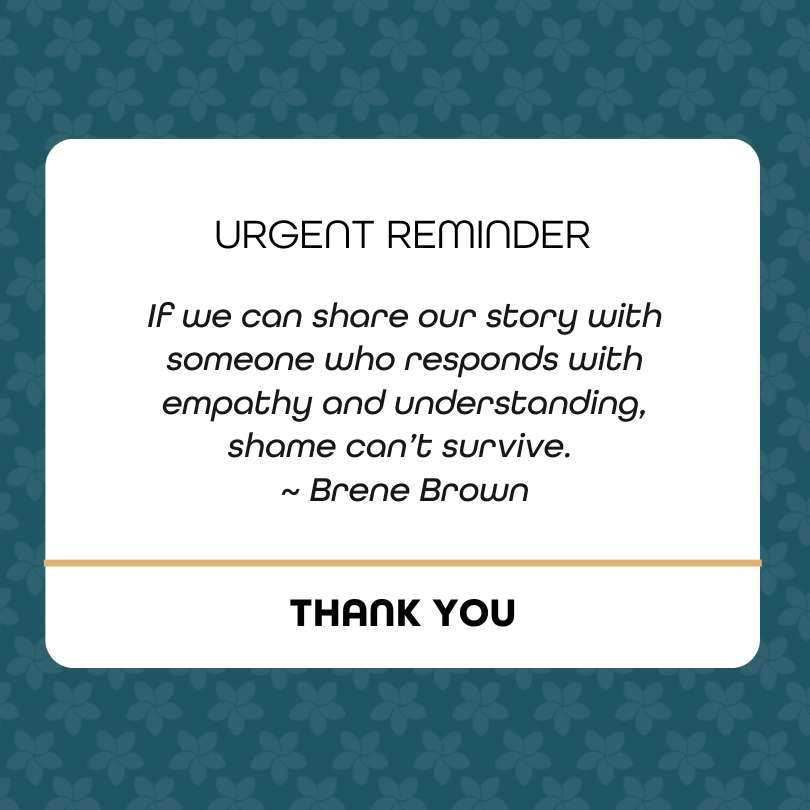
We do this when we feel deep shame. We make ourselves bad and wrong for being a certain way, based on what society says is valuable and acceptable, or not. We try to control the outcomes in our lives just so that we can avoid feeling that awful feeling of being ‘bad’ and ‘wrong’. Shame erodes our sense of self; it erodes our sense of being in the world. When we feel shame we cause a split within ourselves and what develops from there are all sorts of fanciful alterations to who we are, just to avoid being ‘wrong’. These can stay with us for a really long time. We may start people pleasing, just so that we can feel ‘good’ again, even when it is to our detriment. We may start suppressing our voice and our truth, just so that we can feel like we belong. This may start to feel painful. Essentially all the pain we feel is due to us separating from our sense of wholeness. 

So what can we do in order to move out of shame? 

  • We can get honest with ourselves about how we feel about the situation.
  • We can get honest about what we really feel beyond our need to control ourselves, our environment, and our loved ones. 
  • We can find people who are loving, kind, and supportive as we speak out on our shame. 
  • We can open to our wholeness and allow ourselves to receive good things from people in our lives and from life itself.
  • We can stop apologizing for taking up space and instead say thank you to the people who are willing to hold us in our pain.


In love and gratitude,

Need more guidance?

If you want to work with me 1:1 CLICK HERE to  enroll for my coaching program where I tailor a process specifically for YOUR transformation.

Human Connection

Human Connection

There is so much to human relating and communication. One thing no one teaches us is how to CONNECT with another, how to FEEL another, and how to RECEIVE another. Being present is a lot more than being with someone in the body. It’s a deep LISTENING to what someone is saying, but also what they are not saying. It’s tuning into their emotions and their story, their subtle movements when a part of their story is uncomfortable to relay, paying attention to their shiftiness as they try to hide their embarrassment or shame, the conviction in their eyes as they try to avoid their pain.

Have you ever sat with someone and truly allowed yourself to be their witness? To witness who they are, what they are saying beyond their words, beyond the account of their story? This is the receptive mode that allows us to open ourselves beyond the perceptions of our own stories and understandings to truly connect with another human. 

When we practice this deep listening with someone, we not only suspend our own narratives, irritations, and need to respond to what they are conveying, but we create safety from a place of presence. This foundation of safety leads to deep trust and they are the elements of building a strong relationship. It is the place that encourages sharing, not only exchanging words and accounts but sharing who we truly other with the other, sharing what matters to us, what makes us cry, what brings us ecstasy, what we fear the most, and where our deepest passions lie. 

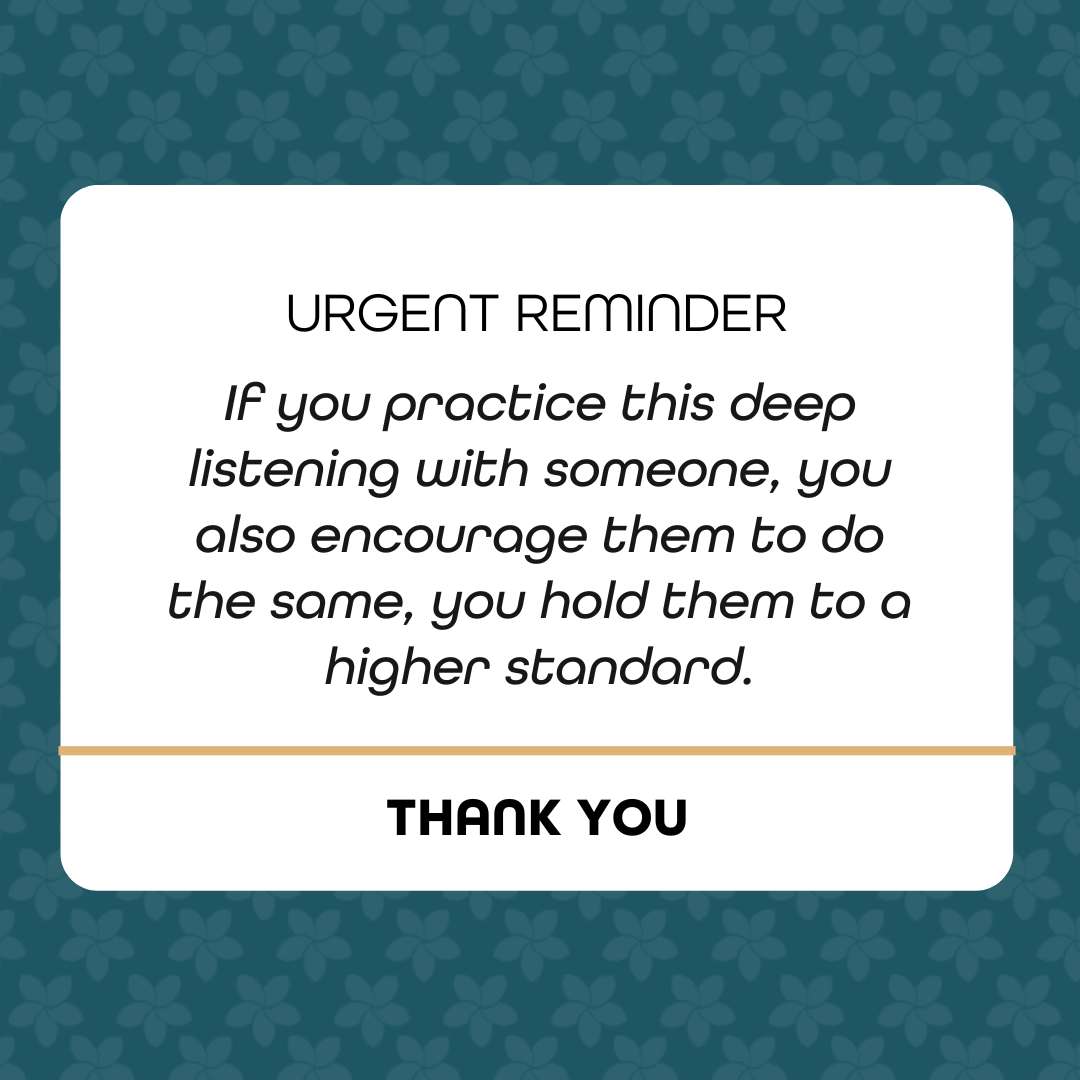
If you practice this deep listening with someone, you also encourage them to do the same, you hold them to a higher standard. However, can you also allow yourself to be received by another? Can you allow yourself to be vulnerable enough to share your story and allow yourself to be held by another (without judging yourself or judging another for the manner in which they choose to hold you?). Watch how you may try to censor yourself to try and protect yourself from the risk of being judged or feeling uncomfortable. Watch how you may experience fear of being truly seen as you open to another human being. Watch as you experience shame in sharing your experience with another.

Bear in mind, human relating is DYNAMIC, so you may not get the same as you give (we are all at different places with relating to ourselves and that will show up in our relating with others). Being the pioneer to encourage deeper connecting in your relating makes you brave and will only leave you feeling good about yourself and your relationships.

Reflections:

  • How open is your heart to connection?
  • How receptive are you to receiving another?
  • How willing are you to be truly seen by another human being and how willing are you to truly open your eyes to see another?

Two hands reaching out to each other, symbolizing openness and connection in human relationships.
A person in deep thought reflecting on communication and connection.

Need more guidance?

If you want to work with me 1:1 CLICK HERE to  enroll for my coaching program where I tailor a process specifically for YOUR transformation.

Receiving Means Giving

Receiving Means Giving

A wise woman told me once that is it important to give if you want to receive. I was fresh on my spiritual path and I had internalized this concept in a very surface-level way. So I thought: ‘Hmmm ok, I want certain things for my life and it will be pretty easy to give things away.’ A very normal and transactional perspective of any twenty-something. 

It was only in my thirties that I really started understanding the concept of giving and receiving. Sometimes we’re unbalanced in one or the other. I couldn’t understand why I was giving so much, living with such an ‘open heart’ but I wasn’t quite receiving yet. I longed to break the salary bracket I was stuck in, I wanted to experience more satisfaction in my relationships, and I wanted a better life experience in general. I gave and gave and gave, sometimes until I was completely empty. 

In my thirties, I realized that the practice of giving was only half of the journey. I would need to travel the other leg of the journey too, and that was the right of receiving. I use ‘practice’ because there is a certain amount of intentionality implied and ‘right’ because there is a certain amount of self-acknowledgment implied. I had realized that my heart was only open to the outside but to myself, it had been shut. I did not know how to receive it, it was a foreign concept to me.

It meant I needed to go a lot deeper with myself, to get real with myself about how much I thought was okay for me to receive. I took a closer look at the opportunities that were given to me by friends, so that I could receive from them and realized I wasn’t really giving them an opportunity to really give to me – I was doing a lot of the giving: of my time, of my energy, of the shiny gifts. I started noticing my behaviour with giving and receiving. 

I started slowly entertaining the idea of receiving, being gifted, and being taken care of. It was the most difficult thing to do. It brought up thoughts of being burdensome to my friends and family. It made me feel shameful, it made me immediately feel like I would be indebted to someone else. I could feel the discomfort in my body as I allowed my mind to imagine this possibility. I realized that I had been avoiding receiving it because it made me feel uncomfortable. Therein lay my work and I started removing all the distorted thinking that got me to believe it was not okay to receive too.

When we allow one without the other, we are closed off. The experience isn’t complete if we don’t experience the other side. If we realise that we are all connected and moving through this experience as one massive wave, we must also realise that when we give to others, we give to ourselves. You know how good it makes you feel to give to someone and see how it impacts them. This is what I mean. In giving to that person, you also get something from the experience. In the same way, when we receive from others, we receive from ourselves. When someone gives you a gift, you would have to be receptive to receiving that gift. There must be some sort of permission you give yourself on some level, in order to receive it. What permission or allowance are you allowing yourself to receive? It’s your giving to yourself. 


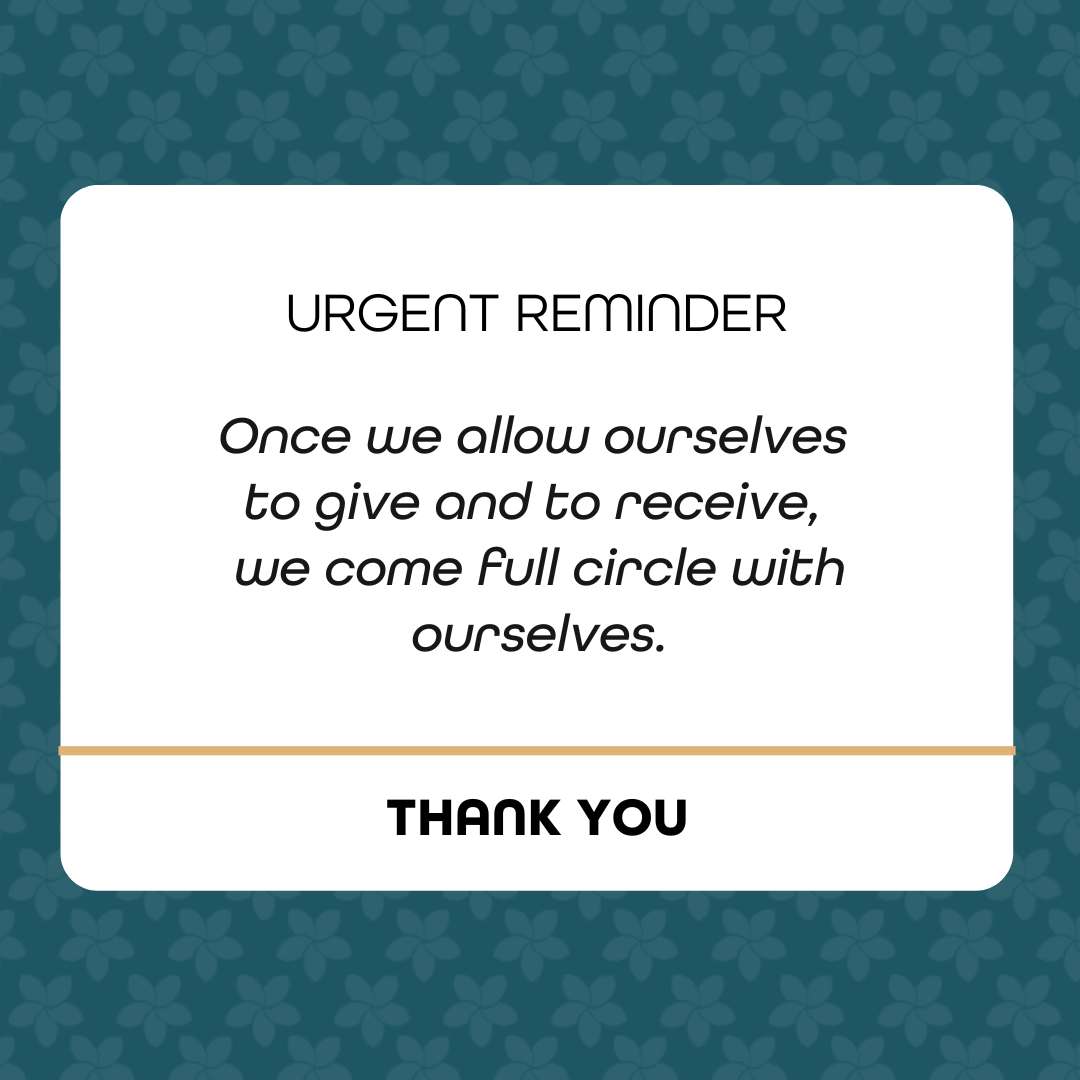
Once we allow ourselves to give and to receive, we come full circle with ourselves.


Questions To Reflect On: 

  • Are you open to fully giving from your heart?
  • Are you giving with pure intent? Or are you expecting to get something back? 
  • Are you allowing yourself to receive from other people and yourself? 
  • What feelings are you wanting to avoid by constantly giving to others?
  • What feelings are you wanting to avoid by constantly receiving from others?

In love and gratitude,

A woman's hands holding a flower, symbolizing the act of giving and receiving
quote from the post
A woman in a meditative pose, reflecting on the balance between giving and receiving.

Need more guidance?

If you want to work with me 1:1 CLICK HERE to  enroll for my coaching program where I tailor a process specifically for YOUR transformation.

Pin It on Pinterest